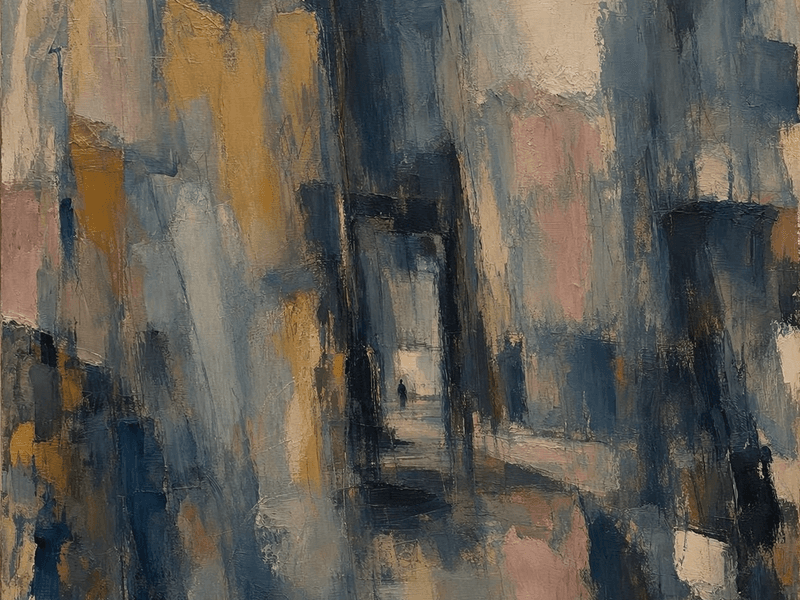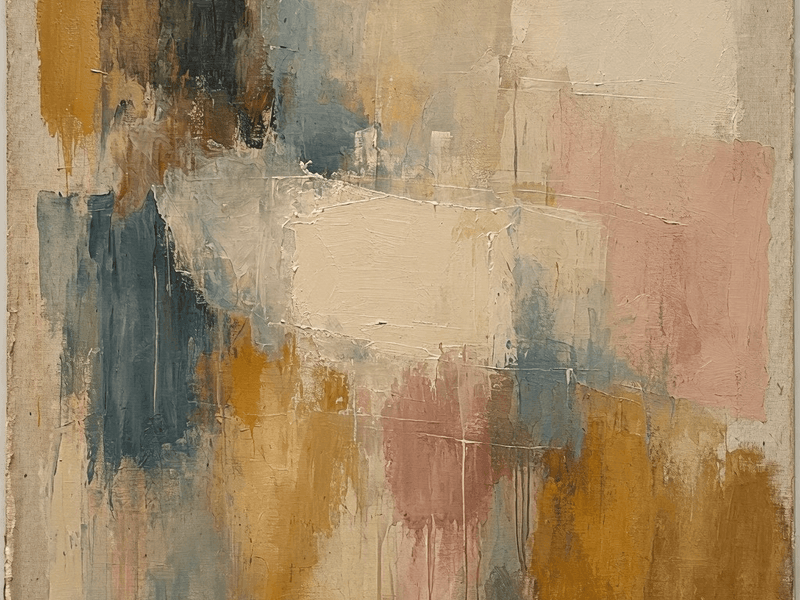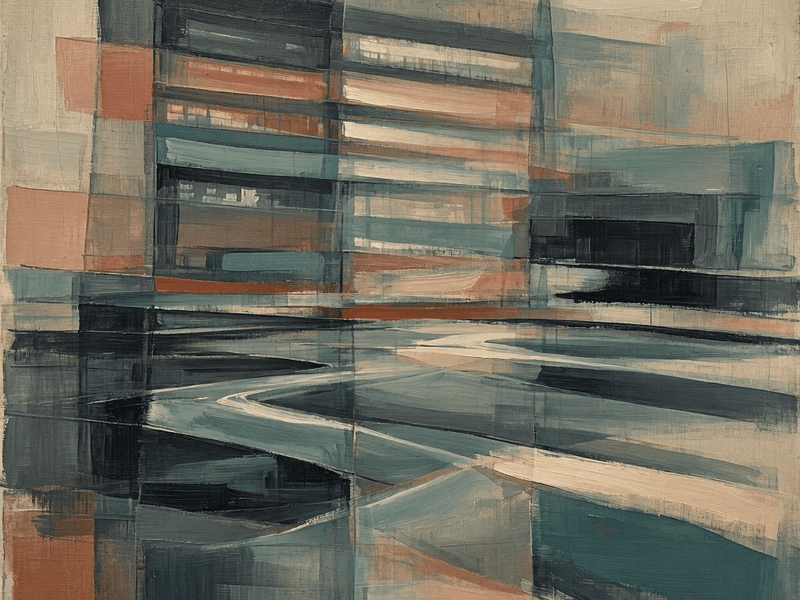
There is a particular silence that settles over a degree show around six in the evening, when the parents have left and the tutors have gone to drink and the students are guarding their rooms with the specific exhaustion of people who have not slept in a week. This is when the work is most visible. The lights are still on. Nothing has been sold. Nothing has been optioned. No press release has decided for you what you are looking at. You walk in, and an entire year of new practice — everything a cohort has been thinking about, arguing over, abandoning, restarting — is laid out in adjacent rooms, without a single gallerist's risk appetite standing between you and it.
The art world treats this event as student theatre. A rite of passage. A soft evening for family and faculty, tolerated by professionals as a kind of civic duty. This is one of the more expensive misreadings currently in circulation.
Because the degree show is not a preview of the market. It is the market's only genuinely primary venue. Everything downstream of it — the graduate prize, the first group show in a project space, the first solo with a young dealer, the first fair booth — has already been curated by someone whose livelihood depends on being right. By the time a work reaches a commercial wall, it has passed through a filter designed to remove exactly the qualities that make emerging art worth looking at: the unresolved, the tonally strange, the technically wrong-footed, the sincere in a register the market has not yet learned to price.
The degree show has no such filter. Its only curator is the academic calendar. Its only selection criterion is that a body of work exists at all. This is precisely what makes it uncomfortable to attend, and precisely what makes it indispensable.
Consider what you actually see there. You see a year of preoccupations in aggregate — which materials the studios have been drifting toward, which historical references have quietly returned, which formal problems a generation has decided are worth wrestling with. You see the failures next to the successes, which is the only honest way to look at anything. You see students who have made one extraordinary work and cannot yet repeat it, and students who have made twelve competent works and may never make a great one, and you have to decide, without help, which is which. No wall text will save you. No dealer will whisper a name. The judgment is entirely yours, and it is exhausting, and this is what looking is supposed to feel like.
The professional habit of skipping this — of waiting until the same practices reappear, laundered, in a gallery six months later — is not a neutral choice. It is an outsourcing. You are letting a dealer's taste, a dealer's budget, and a dealer's risk tolerance stand in for your own eye. You are agreeing, in advance, to only see what someone else has already decided is legible. And then you are surprised, later, when the emerging scene starts to feel narrower than it should, when everything in the young booths at the fair seems to rhyme, when a certain kind of painting is suddenly everywhere and no one can quite remember when it arrived.
It arrived because the filters worked. It arrived because the people who could have seen it earlier, and rougher, and stranger, did not go to the room where it was still all of those things.
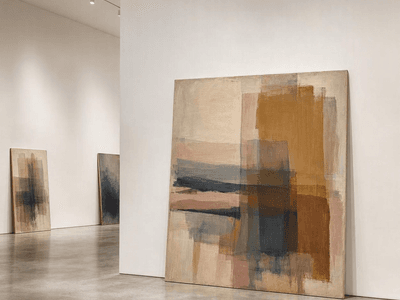
There is a related fantasy that the degree show is somehow beneath serious attention because the work is unfinished. This confuses finish with resolution. A great deal of the most interesting contemporary art is unfinished by design; the degree show is one of the few contexts where that unfinishedness has not yet been rebranded as a style. You are seeing artists at the precise moment when their instincts are still louder than their strategies. This is a condition that lasts, in most careers, for approximately eighteen months. Miss it and you will spend a decade reading interviews in which the artist tries to describe what they used to do before they knew what they were doing.
The counter-argument runs that professionals are too busy, that there are too many shows, that no one can attend everything, that this is what scouts and advisors and the curatorial grapevine are for. This is true and it is also an admission. It is an admission that the infrastructure of taste in contemporary art has become so intermediated that direct looking has been reclassified as a hobby. It is an admission that the people who claim to shape the emerging conversation are, in fact, receiving it pre-shaped. There is no shame in this as a practical matter — days are finite — but there is something worth noticing in the fact that the degree show, the one venue where the intermediation collapses, is the venue the intermediaries most reliably skip.
Going changes what you notice afterwards. Once you have stood in a fluorescent-lit corridor and watched twenty painters try to solve the same formal problem in twenty different ways, you cannot un-see the pattern when one of those solutions appears, isolated and expensive, on a booth wall a year later. You know where it came from. You know what it was competing against. You know which of its cousins were more interesting and did not get picked up, and why, and by whom. Your looking acquires a dimension that no amount of art-fair walking can supply, because the fair is a room of survivors and the degree show is a room of the whole cohort.
This is what serious looking is: seeing the field, not the shortlist. The degree show is the last place in contemporary art where the field is briefly, accidentally, visible. It will be misread as student theatre for as long as the professional culture prefers curated legibility to raw information. The correction is not institutional. It is personal. Put the date in the calendar. Go at six in the evening, when the parents have left. Walk slowly. Trust your own boredom and your own interest in equal measure. Leave without asking anyone what they think.
That walk is where a career of looking begins, or it begins nowhere at all.