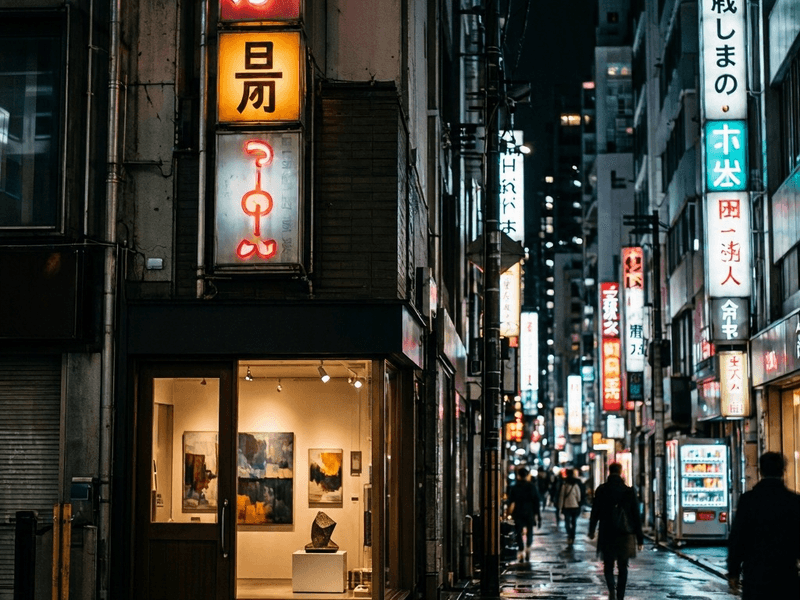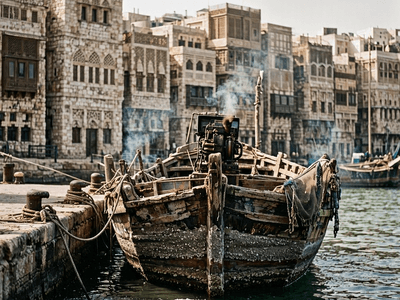
The humidity hits first. Then the sodium haze off the corniche, the coral-block façades bleaching in slow motion, the smell of diesel and cardamom rolling out of alleys narrower than a shoulder-span. Jeddah has been a port for fifteen centuries. It has been an art city for at least fifty years. Only now, after the rest of the Gulf spent a decade cutting ribbons on foundations and free zones, does the outside index catch up to what Jeddah already knew about itself.
The Athenoir index tracks more than six hundred early-career artists across the Gulf corridor: Jeddah, Riyadh, Abu Dhabi, Dubai, Doha, Sharjah, Manama, Kuwait City, Muscat. Jeddah returns 107 emerging artists, the third-largest cohort in our entire emerging database of 7,764 names — behind only Nairobi and Istanbul, ahead of Tel Aviv, ahead of Riyadh's 96, ahead of Abu Dhabi's 96, ahead of Dubai's 95. Read that line again slowly. The Gulf's largest working studio city is not the one with the tallest skyline.
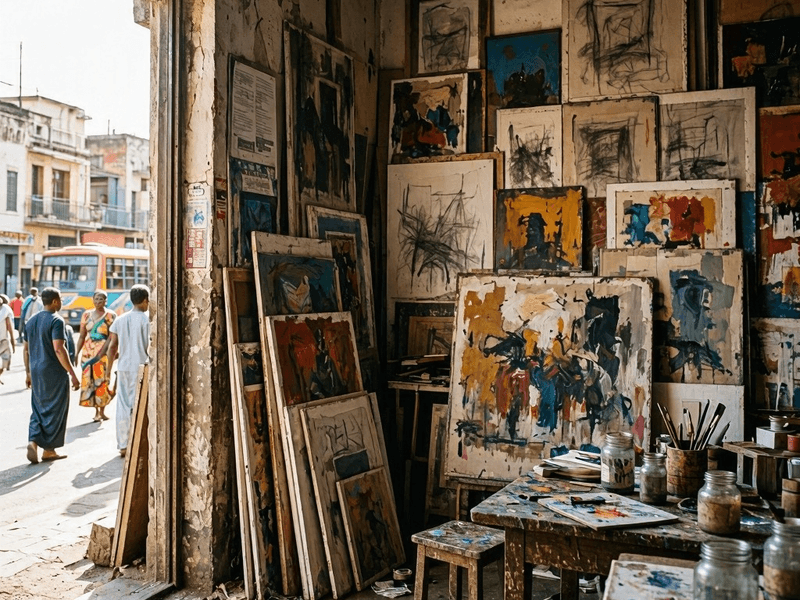
This matters because the numbers describe a specific kind of density: not visitors, not fair-week footfall, not press releases, but practitioners with sustained output. Jeddah's cohort is older than the region's average in the sense that mattered before the museums arrived — it self-organized. Studios in converted villas in Al-Rawdah. Ground-floor spaces behind print shops in Al-Salamah. Rooftops in Al-Balad where the wooden roshan screens filter light the way a good curator filters a wall text.
Walk Al-Balad at dusk. The old town is a UNESCO site, which sounds like a preservation cage but functions on the ground as a working district — carpenters, welders, framers, a fabric merchant who has cut backing cloth for three generations of painters. An artist who needs a plinth built can have one by Thursday. This is not romance. It is infrastructure, and it is the reason the studio economy here predates the institutional one.
Drive north up Prince Sultan Road and the register shifts. Glass towers, coffee bars indistinguishable from Lisbon or Seoul, young women in abayas open at the throat carrying portfolios flat against their hips. The Jeddah art crowd is bilingual in a way the wider Gulf sometimes performs but rarely lives — Hejazi Arabic threaded with English threaded with the specific vocabulary of a studio crit. The conversation, if you catch it, is about materials.
Materials matter because the Athenoir index tells us what the emerging majority is actually making. Across the emerging database the most common practices cluster tightly: installation at 268 artists, painting at 250, drawing at 241, mixed media at 238, photography at 234, sculpture at 232, watercolor at 230, performance at 223, collage at 222, ceramics at 211. Digital practices sit right alongside — sound art 213, AI art 212, generative art 209, video 209. The picture is not of a region abandoning the hand for the screen. It is of a generation refusing to choose.
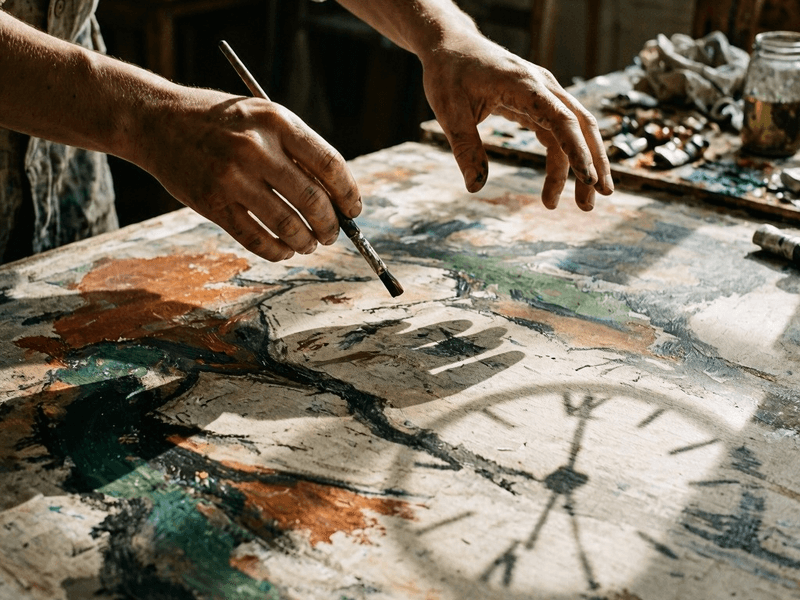
Jeddah embodies that refusal more than its neighbors do. The city's practitioners tend toward the tactile — coral dust, salt-corroded metal, Red Sea driftwood, the pigments that survive humidity and the pigments that don't — while running parallel digital practices out of the same rooms. A ceramicist who codes. A photographer who welds. The clean disciplinary borders that Western programs still enforce simply do not describe what happens in a Jeddah studio at ten at night.
Compare this to the established tier. Our established database of 1,643 names skews classical: painting dominates at 130 artists, sculpture at 69, installation at 58. Digital categories exist but are thinner — AI art at 29, generative at 31. The generational shear is real. The emerging cohort is not a younger version of the established cohort. It is a different animal, and Jeddah is one of the places where that animal is loudest.
Price tells its own story, and here we tread carefully because art is not a portfolio line. Within the Athenoir emerging index, roughly two thousand artists list a lower entry point below five thousand dollars. The five-to-ten and ten-to-fifty bands hold most of the remainder. The vast majority of the emerging database is accessible below fifty thousand dollars. In Jeddah specifically, the entry-level economy runs through studio visits arranged by word of mouth, through the occasional open weekend, through the small commercial spaces that have opened along Tahlia and in the districts inland from the corniche. The transaction is closer to a conversation than a market.
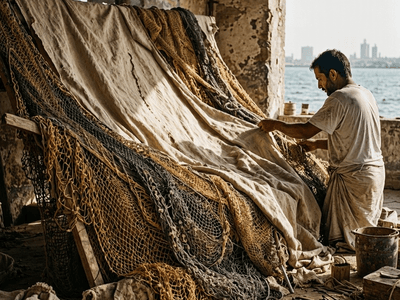
What Jeddah does not have, and this is worth saying plainly, is the institutional gravity of Abu Dhabi or the fair-week choreography of Dubai. There is no equivalent local machine for legibility. The trade-off is that legibility elsewhere has produced a Gulf art discourse increasingly optimized for the international visitor's forty-eight-hour attention span. Jeddah has not optimized. Jeddah has continued.
The Red Sea itself is a character in the work here in a way the Arabian Gulf is not, quite, in the eastern cities. The sea in Jeddah is older water, hajj water, trade water, the water that carried ivory and coffee and manuscripts before it carried tankers. Artists born within sight of it treat it as a co-author. You see this in the recurrence of salt as medium, of tidal marks as compositional logic, of the color range between rust and pearl.
A practical map, then, for the visitor who wants the working city rather than the brochure. Begin in Al-Balad early, before the heat. Move to the mid-city studio clusters by mid-afternoon — the introductions are made by other artists, not by galleries, and the phone number matters more than the address. End on a rooftop somewhere north, with someone showing you drawings on an iPad next to a stack of unstretched canvases. If a plinth needs building, someone knows a carpenter.
The Athenoir index is a snapshot, not a verdict. Numbers move. Cohorts age into the established tier, new names enter the emerging one, cities rise and stall for reasons that have nothing to do with the quality of the work being made inside them. But the shape of what the current snapshot describes is unambiguous. Jeddah is not the Gulf's future art city. It is the Gulf's present studio city, and it has been for longer than the discourse has been paying attention.
Go before the discourse catches up. Bring cash for framing. Learn the word for salt.