In March 2021, Christie's auctioned a JPEG file by Beeple (Mike Winkelmann) for $69.3 million. The sale established NFTs as a legitimate auction category, unleashed a speculative wave, and collapsed within 18 months. By 2023, the NFT market had declined 95% from its peak. In 2025, it began a measured recovery.
The 2026 Art Basel and UBS report records that 51% of high-net-worth collectors purchased digital art in 2024–2025, making it the third-largest category by collector participation after painting and sculpture. Athenoir's intelligence database tracks 911 digital artists across all segments — the second-largest medium category in the entire database. The question is no longer whether digital art has a market. The question is what kind of market it is.

The 2021–2022 NFT boom created a market that conflated speculation with collecting. Profile picture NFTs (PFPs), generative collections, and purely financial instruments were sold alongside genuine artistic work. When the speculation collapsed, so did most of the financial-instrument category.
What remained was a smaller but more clearly defined market for digital art as art: works with identifiable artists, artistic intent, cultural context, and institutional validation. The correction, painful as it was for many holders, performed a useful function — separating collecting from speculation.
Hito Steyerl (Germany) is the most critically validated digital artist of her generation. Her video essays — combining documentary material, CGI, and theoretical text — are held by MoMA, the Tate, and the Hamburger Bahnhof. Her work "How Not to Be Seen: A Fucking Didactic Educational .MOV File" (2013) is one of the most discussed works of the decade. Steyerl never participated in the NFT market and remains the strongest institutional case for digital art's long-term art-historical standing.
Beeple's own market post-2022 is revealing. His $69.3 million "Everydays" record has not been remotely approached at auction since. However, his large-scale LED panel works — physical installations displaying digital animations — continue to sell at Art Basel and through galleries at six-figure prices. The hybrid physical-digital format appears to be the emerging commercial norm.
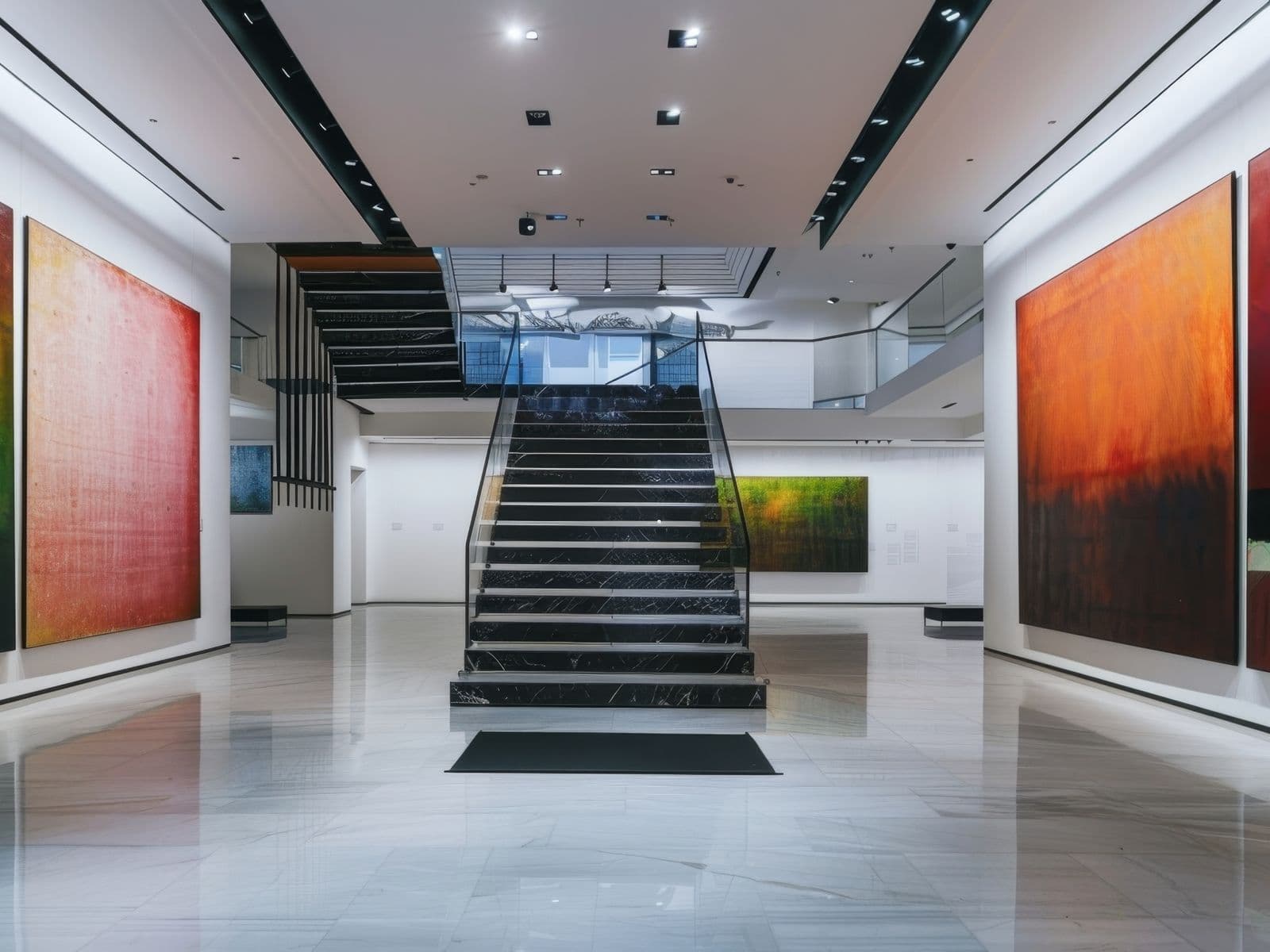
At Art Basel Miami Beach 2025, the "Zero 10" section — dedicated to digital and technology-based work — sold out within hours. A major Beeple LED installation, a Refik Anadol data sculpture, and works by Auriea Harvey all found buyers. The section's success demonstrated that within the right context (institutional fair, physical presentation, credentialed artists), digital work still commands significant collector interest.
Refik Anadol — known for his AI-generated data sculptures at institutions including MoMA and the Serpentine — represents one model for digital art's commercial future: large-scale installations in both public and private contexts, where the physical presentation is inseparable from the digital content.
Athenoir's database tracks 911 digital artists, with the majority in the emerging and ultra-emerging tiers — artists working at price points of $500 to $50,000. This cohort is the most geographically distributed of any medium category: digital art requires only a computer and internet connection, eliminating the studio-space barriers that affect painting and sculpture. The consequence is that the emerging digital art market is genuinely global in a way that other mediums are not.
The structural challenge for digital collecting at the emerging level remains provenance and permanence. Physical art endures; digital files require active preservation infrastructure. The most credible platforms for emerging digital art are those that provide long-term storage guarantees, clear edition management, and an artist-controlled resale mechanism.
Sources: Art Basel and UBS Global Art Market Report 2026; Christie's publicly reported Beeple sale (March 2021); Athenoir Art Market Intelligence Database (911 digital artists tracked); Art Basel Miami Beach 2025 press reports.